
5th Edition of Support Program for PhD Students 2025 (North Western University, Centre of Excellence for Nutrition – Potchefstroom South-Africa)
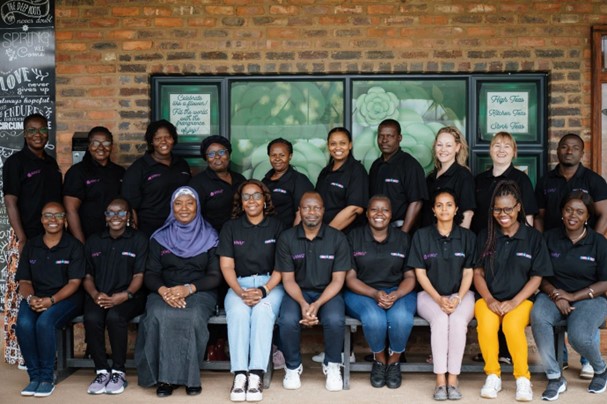
2025 Participants Support Program for PhD Students NWU (SA)
The Van Dam Foundation supported the participation of two PhD students. The NWU-Programme aims to provide complementary training to the training that PhD students receive at their home institutions. It prepares and enables students to successfully navigate their PhD research and make the most of their academic journey.
The Program focused on critical elements of the research process, including protocol writing, analysis, and publication of results. The Program consisted of two parts:
- Online/distance learning: Completion of modules took place from 14 July to 3 October 2025, following a fixed weekly schedule. Weekly virtual face-to-face sessions were also held with the participants.
- Face-to-face meeting: A six-day, full-time, face-to-face meeting was held in Potchefstroom, South Africa, from 26 to 31 October 2025.
The Programme was successfully completed by 19 PhD candidates from 8 different African countries. Participants came from Ghana, Kenya, Malawi, South Africa, Nigeria, Ethiopia, Rwanda, and Mozambique. Some of the words participants used to describe the Programme included informative, insightful, supportive, educative, and fun.
The grant of the Van Dam Foundation facilitated the participation of Alice de Abreu from Mozambique and Patience Gaa from Ghana. They reported as follows:
Alice de Abreu (Mozambique)
Project title: Assessment of the magnitude of food insecurity, eating habits and health in school adolescents from 15 to 19 years in the city of Maputo
My p articipation in the PhD Support Program organized by North-West University (NWU), South Africa, was a unique and deeply enriching learning experience, combining online components with an intensive in-person training week. Throughout the course, I strengthened essential knowledge in research design, quantitative and qualitative methodologies, formulation of research problems, hypotheses, and sampling strategies, as well as fundamental ethical aspects in studies involving human subjects. By the end of the program, I was able to develop a protocol capable of generating scientific evidence on food insecurity among adolescents in the city of Maputo.
The program enhanced my ability to develop robust theoretical frameworks and apply advanced data analysis techniques, including regressions, statistical interpretation, and the use of software such as SPSS. It also significantly improved my competence in producing tables, charts, graphs, and other visualizations for clearer presentation of results. The content covered further strengthened my skills in academic writing, literature review development, scientific communication, and manuscript preparation for publication. I learned strategies for navigating the peer-review process and selecting appropriate academic journals, which increased my confidence in pursuing scientific publication.
In parallel, I developed critical skills in analytical reasoning, project management, and time management key tools for ensuring steady progress in my PhD in Food Science and Technology at Eduardo Mondlane University, while balancing academic, professional, and personal responsibilities. The training also contributed to my proficiency in using digital tools for reference management, document structuring, and remote collaboration, thereby improving the efficiency of my research activities.
On a personal level, the program provided renewed motivation and greater confidence in the development of my doctoral project, supported by interactions with mentors and colleagues from different institutions and countries, creating an academic network that continues to offer support and inspiration to this day. The face-to-face week was particularly beneficial for strengthening wellbeing, providing opportunities to discuss stress management, resilience, and self-care strategies, fundamental aspects for a sustainable doctoral journey. The benefits of this program are already visible in my PhD research on food insecurity and adolescent health, as my protocol has been approved and I have completed quantitative data collection. I am currently in the process of cleaning the database to begin data analysis in SPSS.
In my professional and academic roles, the training strengthened my leadership in supervising undergraduate and master’s students and in integrating scientific evidence into public health decision-making within the Municipality of Maputo.
I would like to conclude by expressing my heartfelt gratitude to everyone who directly or indirectly contributed especially the Van Dam Foundation to making this unique opportunity possible an opportunity that allowed me to become the first Mozambican to participate in the PhD Support Student Program.
Patience Gaa (Ghana)
Project title: A climate-smart nutrition intervention to promote diet and antenatal care utilization among pregnant women in Northern Ghana: A randomized controlled trial.
I wish t o express my deepest appreciation to the Van Dam Foundation for sponsoring my participation in the North-West University PhD Support Programme. I am profoundly grateful for the comprehensive support provided, including tuition, travel, accommodation, and stipends, which enabled me to fully engage with and benefit from this exceptional learning opportunity.
The programme was truly transformative. Delivered over 14 weeks in a hybrid format, it brought together 19 PhD candidates from eight countries across Africa and provided intensive training in advanced proposal development, research methodology, academic writing, and publication skills. These sessions significantly strengthened the quality, coherence, and clarity of my doctoral research. Through hands-on guidance in mixed-methods approaches, i.e, quantitative and qualitative approaches, randomization procedures, statistical analysis, and data management, I gained deeper methodological confidence and a stronger analytical foundation for my study.
A key strength of the programme was the rich peer-learning environment it created. The constructive feedback I received from facilitators and colleagues helped refine my proposal, made my objectives more SMART, sharpened my analysis plan, and enhanced my ability to communicate complex research ideas clearly. Daily reflections and the ABCD of PhD (“Apply Bum to Chair Daily”) further instilled discipline, intentionality, and consistent progress in my academic work.
It was also a refreshing and uplifting time away from home during the face-to-face session in Potchefstroom, which gave me space to reflect deeply and work intensively on the essential components of my study. During the face-to-face sessions, I reworked and refined critical sections of my research, including redefining the climate-smart nutrition intervention component and strengthening the coherence of my proposal. The serene environment at the Sports Village and The Roots, where the programme was held, provided the ideal atmosphere for focused work, clarity of thought, and personal wellbeing.
Equally impactful were the networking and collaborative opportunities. I had the privilege of meeting a truly lovely and supportive team of PhD candidates, along with facilitators who were selfless in sharing their knowledge and expertise. Their encouragement, patience, and openness created a nurturing learning environment where I felt seen, supported, and motivated. Through these interactions, I gained a renewed appreciation that I am not alone in this PhD journey but a wider community of scholars walking alongside me.
The progress I made during the programme was so significant that, upon my return, my supervisors expressed their satisfaction with the advancement and clarity of my proposal. Based on the improvements achieved through the training and feedback at North-West University, they have advised that I proceed to begin the ethics application process. This milestone reflects the tangible impact of the programme on the quality and readiness of my research proposal.
I remain sincerely thankful for the Van Dam Foundation’s generous investment in my academic journey and for its continued commitment to empowering early-career scholars. Your support has made a meaningful and lasting impact on my development as a researcher, and I am truly grateful. I would also like to express my profound appreciation to the facilitators, coordinators, and directors of the North-West University PhD Support Programme. Their dedication, expertise, and unwavering commitment to supporting emerging scholars made this experience truly exceptional.